


Why Learning about Sustainability is More Important Than Ever?

This article was originally posted on Alice's personal LinkedIn. The Singapore Education Network shared it with a broader group of educational professionals across Southeast Asia in their latest Education Brief.
*
“Most Singaporean parents are not confident their children can pay the bills with a job in sustainability.” This quote hit hard - it came from a 19-year-old electrical engineering student working on a project to repurpose expired face masks in an interview with Eco-Business.
What has caught my eye equally is another quote from a green startup founder, “social value of environmental work is still poorly understood in a highly consumer-driven society, which makes ESG-related businesses hard to sustain.”
As a researcher and educator advocating for integrating sustainability learning into the “routine” curriculum, I can’t say that such news doesn't generate negative feelings. But then, I realise, that is exactly why learning about sustainability is more important than ever.
Here are some gaps in our current sustainability learning and application systems:
For a young job seeker or mid-career switcher, it is tempting to jump on the bandwagon of sustainability training and earn a certificate with pride, but what doors does it open? What job opportunities are out there? And how exactly can the concepts they’ve learnt be applied in real business and societal contexts? Do training providers elaborate on that in their lesson plan and delivery, or do they expect students to figure it out all on their own?
From a business standpoint, sustainability entrepreneurs are the first movers in an emerging industrial category. I can imagine that one must be equipped with strong motivation and a genuine belief in what they are doing to dare into the unknown.
For example, a slow-fashion owner I’ve met sources local merino wool, sews it into small garments in a workshop, applies handmade prints, and sends them to a home-based machinist for finishing. She then returns the products to her space for packing and shipping to customers. Due to this delicate process, the speed of production is much slower, and the price of her gloves is much higher. She’s teaching part-time at a secondary school. I figure it’s hard to run an ethical small business and feed the family at the same time.

How about corporates? From personal experience, the “sustainability” unit is often pushed into business-as-usual as an ill-fitting LEGO block. It may look shiny from the outside, producing annual reports, fancy videos, charts and numbers. But the truth is, not many people inside the company care or even know what they are doing, including the leaders who set up the unit because “other companies are doing so”.
Sustainability professionals can be siloed and struggle to access the information and data needed for analysis, let alone to move any initiative forward. Of course, not all companies are doing so, but I believe there are some brands truly trying to integrate sustainability into what they do, and they are making progress.
It seems the cases I outlined above are only making the problem sound more complicated. So, should we learn sustainability? Should we do sustainability in business?
My answer is a firm “yes”.
Not only are our current methods of production and consumption unsustainable for the coming decades, but if we continue to prioritise relentless resource extraction and sole economic growth, generation after generation, the point of exhaustion will come even sooner.
Some global movements are in place, such as the launch of the Education for Sustainable Development for 2030 Global Network (ESD-Net 2030) by UNESCO. However, to realise such a complex, systematic change, both top-down empowerment and bottom-up efforts are essential.
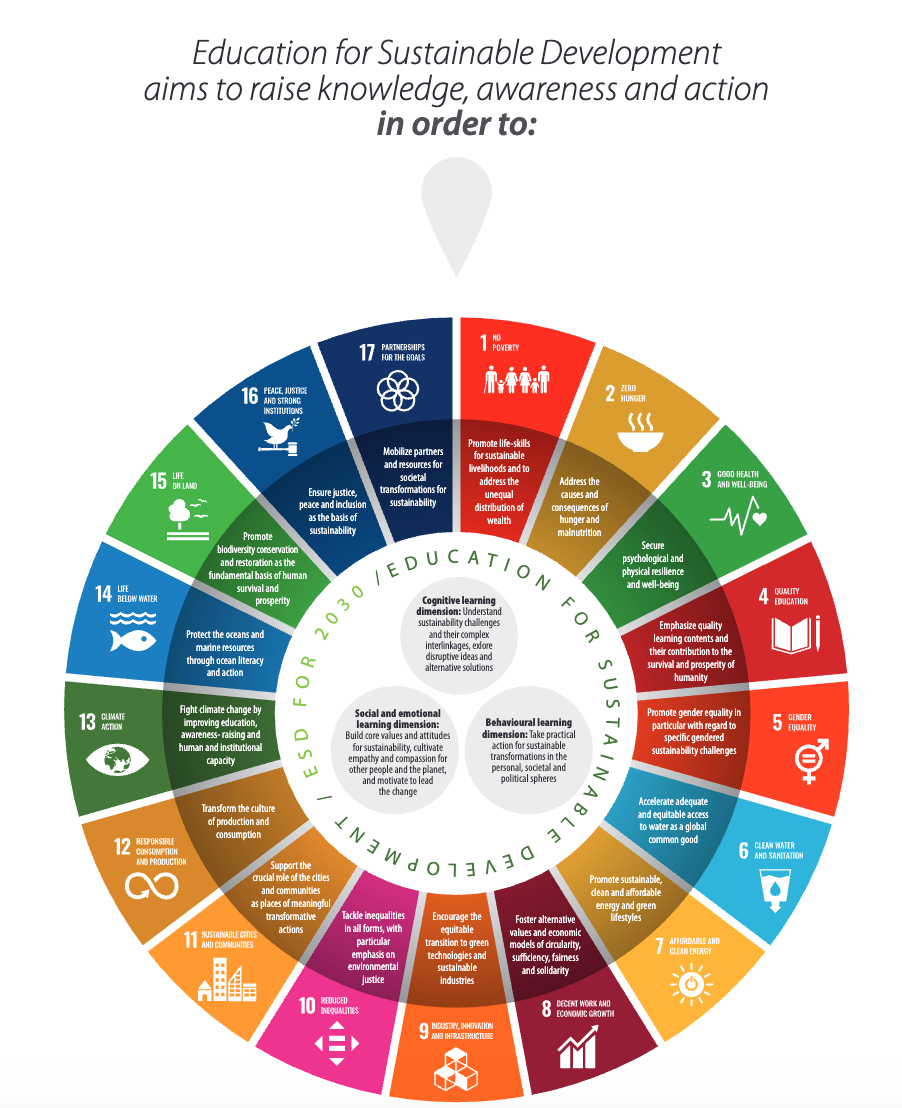
Change is painful. But we have to. So the next question is - “how”?
The Diffusion of Innovations Theory posits that the adoption of any new idea will go through a few stages: from earlier awareness, to initial adopters, and eventually saturated and recognised as a norm in the society. However, the speed of adoption depends on:
Relative advantage - whether an innovation is viewed as better than the idea it supersedes.
Compatibility - is the degree to which an innovation is viewed as consistent with the current values, previous experiences, and needs of prospective adopters.
Complexity - whether an innovation is perceived as relatively difficult to understand and to use.
Trialability - the degree to which an innovation may be experimented with on a restricted basis.
Observability - the degree to which the innovation outcomes are visible to others.

In a nutshell, for the big idea of “sustainability” to take hold, it has to be perceived as valuable by individuals and across wider society. If we succeed in communicating that value, the few cases mentioned at the start may take a positive spin:
An individual may choose to study sustainability with a clearer purpose of why and what to learn, and apply the skills in a matching field underneath the broader sustainable goals. At the same time, he or she might become a more responsible customer who genuinely considers sustainability factors when purchasing and reduces unnecessary consumption overall. This shift will support small ethical business owners like Kate, who may be more motivated to continue and improve their business models in line with the slow fashion philosophy. As more successful businesses integrate sustainability into their operational principles, they create more career opportunities for professionals.
This positive feedback loop sounds ideal, but in practice may be hindered by a variety of factors. Time always seems to be in short supply, but if we don’t act, it will run out before we can even attempt any change. Gladly, both the academic and practitioner worlds are driving deeper discussions and shaping practices. As a new student in this field, I wouldn't understand "degrowth" or how to personally interpret "living sustainably" without first learning about sustainability myself. And the journey goes on.
Many times, behavioural change is grounded in values. Perhaps the ideology of “sustainability” itself is becoming a value as we transition into a new way of thinking and living. That instead of treating it as a “product”, it is to be infused into our fundamental belief systems, providing a new pair of lenses for evaluating and making choices in the future.
*Views expressed are strictly personal.
References:
CommunicateHealth. (2018). Diffusion of innovations. In Useful Theory: Diffusion of Innovations. https://communicatehealth.com/wehearthealthliteracy/useful-theory-diffusion-of-innovations-2/
Eco-Business. (2026). As sustainability retreats, Singapore youths face a green jobs reality check. https://www.eco-business.com/news/as-sustainability-retreats-singapore-youths-face-a-green-jobs-reality-check/
El Malouf, N.& Bahemia, H. (2026). Diffusion of Innovations: A review. In S. Papagiannidis (Ed), TheoryHub Book. Available at https://open.ncl.ac.uk / ISBN: 9781739604400
Pedersen, E., Tiburzi, L., Rosati, F., Costa, R. and Calabrese, A. (2025). Silos and Sustainability: How the Permeability of Organizational Boundaries Shapes Corporate Sustainability Integration. Bus Strat Env, 34: 6325-6344. https://doi.org/10.1002/bse.4302
UNESCO. (2020). Education for sustainable development: A roadmap. UNESCO. https://unesdoc.unesco.org/ark:/48223/pf0000374802


Comments